Last updated:
Jogging in Rome has something special about it. Running here means moving through thousands of years of history – past ancient monuments, through papal gardens and princely villa parks, on paths that have been walked since antiquity. Rome is one of the most beautiful cities in the world for running – if you know the right routes.

Jogging in Rome City Centre
City jogging in Rome is best in the early morning hours. Anyone who sets off at six o’clock has the city almost to themselves. Even the Spanish Steps and the Trevi Fountain are barely visited. Even on hot days, running in the early morning is pleasant.
There is something uplifting about having St Peter’s Square almost to yourself in the first morning light, or jogging past the Colosseum before the city wakes up.
Anyone staying in the centre is not far from one of the great villa parks or the banks of the Tiber.
The Tiber
In the past, Rome’s buildings came right down to the river bank and the city was regularly flooded. At the end of the 19th century the high embankment walls were built and paved paths laid along the river.
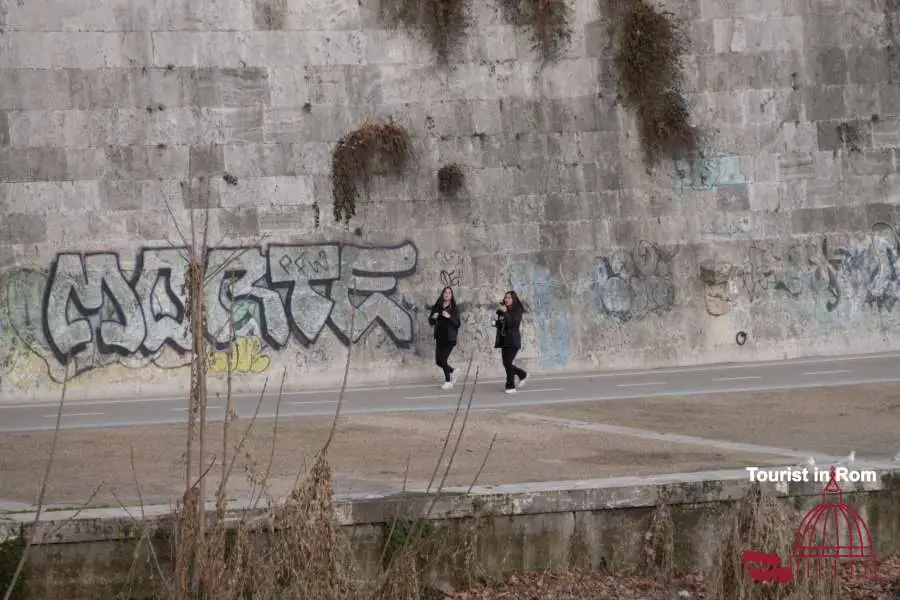
At every bridge over the Tiber there are steps leading down from the embankment walls to the water’s edge. At the larger bridges there are ramps that are easy to run and cycle on.
The Tiber path runs through the whole of Rome and is shared with cyclists. The path is wide enough that walkers, joggers and cyclists rarely get in each other’s way. The route runs from Via Flaminia in the north to just before the Marconi Bridge in the south, near the Basilica of San Paolo. The final stretch to the bridge follows the quiet Lungotevere di Pietra Papa. The total distance from Tor di Quinto station to the Marconi Bridge is just over 15 kilometres. At the Marconi Bridge several bus lines are available, or you can continue to San Paolo metro station. The right bank of the Tiber (orographic right) is recommended, as this is where the cycle path runs.
Jogging near the Colosseum and Circus Maximus
To the south of the city centre lies the archaeological park of the Colosseum. From Piazza Venezia, the traffic-calmed Via dei Fori Imperiali leads directly to the Colosseum. From there the route continues along Via di San Gregorio to the Circus Maximus.
Those who enjoy hills can take a detour along Via Claudia to the Villa Celimontana and run back down the picturesque Via di San Paolo della Croce – this route also leads to the Circus Maximus.
The former racetrack is a good place to run, though there is no shade and it can get very hot on sunny days. A shadier alternative is the green area along Viale delle Terme di Caracalla.
From the Circus Maximus the loop can be closed in different ways: up Via di San Teodoro to the Capitoline Hill, or along Via del Teatro di Marcello back to Piazza Venezia.
Via Appia Antica
The Via Appia Antica is only partially suitable for running – the surface alternates between modern cobblestones (sanpietrini) and ancient paving, which makes running demanding. For a comfortable run in the area, the nearby Parco della Caffarella is a better option. Access points are opposite the Domine Quo Vadis bus stop served by lines 118 and 218, and from Via Latina.
Those who still want to run on the Via Appia Antica: from the Catacombs of Calixtus the route continues past the Catacombs of St Sebastian, to the Mausoleum of Cecilia Metella and on to S. Maria Delle Mole – a distance of around 15 kilometres. From there the train runs back to Rome.
Parco della Caffarella
The Parco della Caffarella is part of the Via Appia Antica regional park. Access points are opposite the Domine Quo Vadis bus stop served by lines 118 and 218, and from the Appio Latino district via Via Latina. The park offers a small stream and varied vegetation – ideal for a quiet run away from city traffic.
Parco degli Acquedotti
The Parco degli Acquedotti has particularly beautiful scenery. In the distance the Apennines and the Alban Hills are visible, and the route passes between the ruins of ancient aqueducts. Access is via Viale Giulia Agricola at the stop of the same name on Metro line A. Those living south of Metro line A will find this one of Rome’s most scenic running routes.
Parks and Villas
Every district of Rome has green spaces suitable for jogging. The great villa parks offer beautiful routes and variety in every season.
Villa Pamphili
Villa Pamphili lies in the west of Rome and is served by bus lines 31, 33, 791 and 982. It is also easy to reach on foot from the Gianicolo and from Viale dei Quattro Venti.
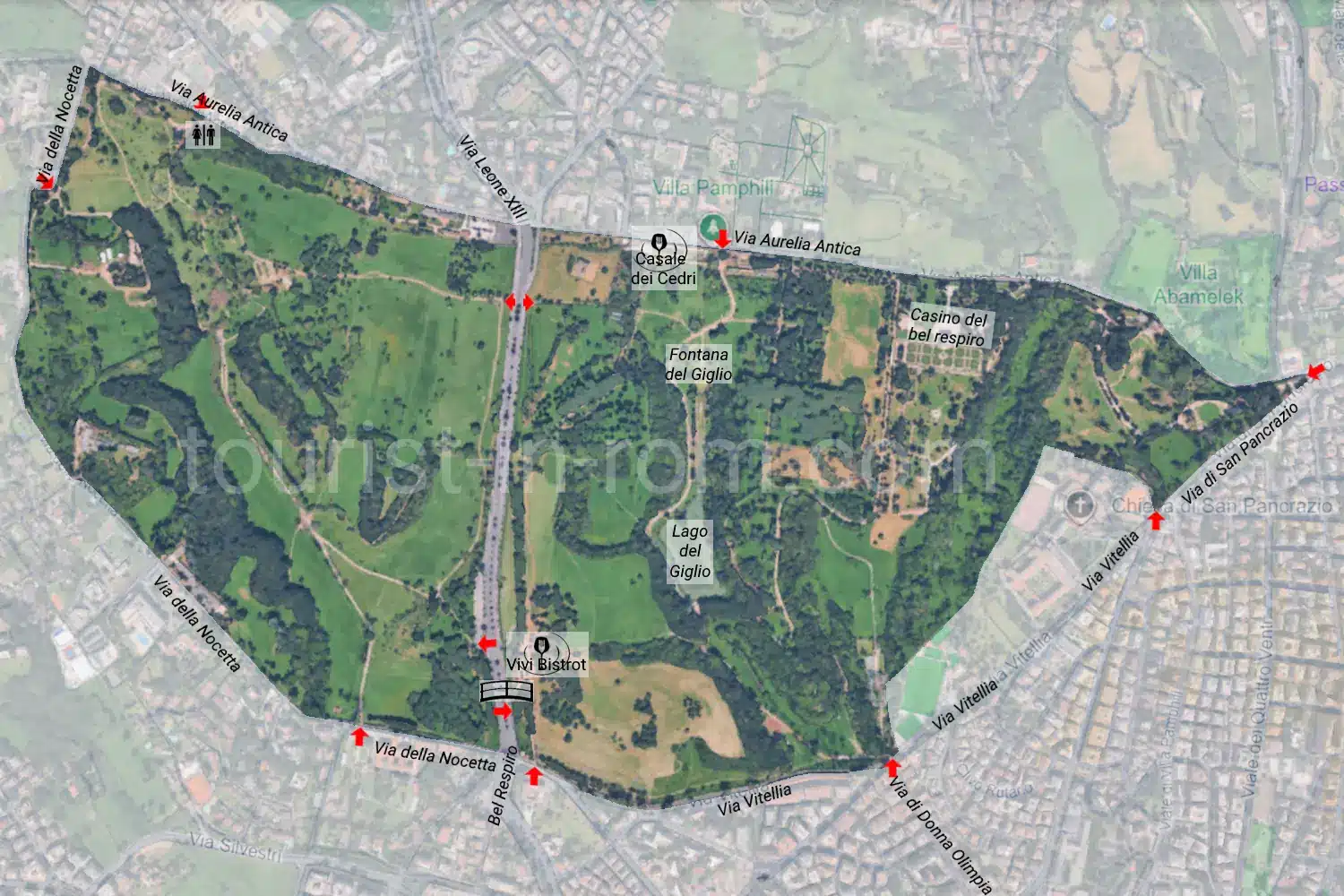
The villa is divided by Via Leone XIII, built for the 1960 Olympic Games. A footbridge in the southern part of the villa connects the two halves. Nearby are the Vivi Bistrot and the Caffetteria Casale dei Cedrati – both good rest stops. The map on this page shows the villa’s entrances and both rest stops.
The running routes coming up from the Tiber are particularly scenic, though the climb up to the Gianicolo hill has to be tackled. The path from Ponte Principe Amedeo passes the Bambin Gesù children’s hospital and leads to the viewpoint at Piazzale Giuseppe Garibaldi. Coming from the Vatican, this route is accessible through the Terminal Gianicolo car park.
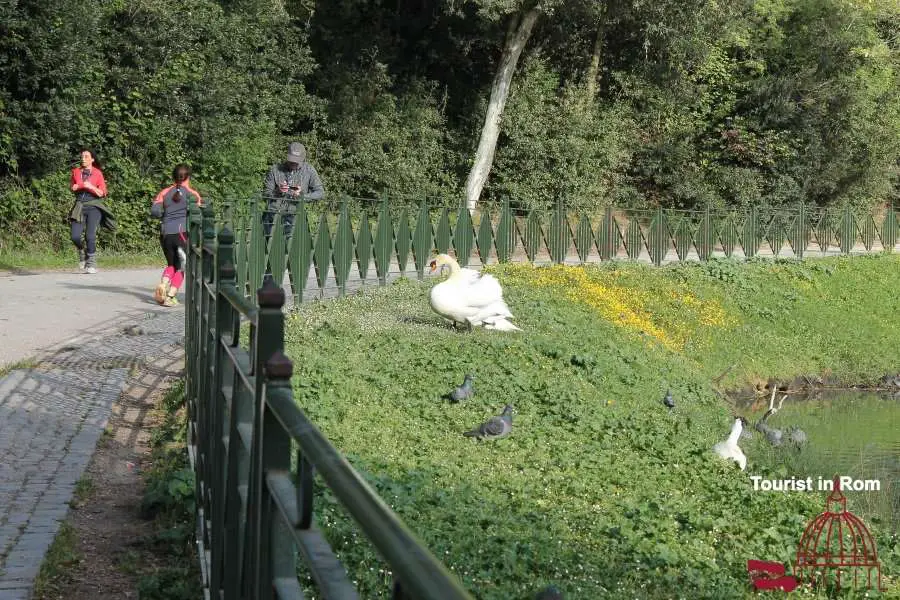
A particularly scenic running route is the approach from Ponte Sisto: Ponte Sisto → Piazza Trilussa → Via Benedetta → Via Garibaldi – past the Fontana Paola and with beautiful views over Rome – → Via di San Pancrazio → Villa Pamphili. A shortcut on Via Garibaldi leads along Via di Porta San Pancrazio, which passes beneath the Real Academia de España en Roma with the Tempietto di Bramante, and up a staircase directly to the Fontana Paola.
Pincio and Villa Borghese
The Pincio and Villa Borghese are connected and centrally located. The Pincio lies above Piazza del Popolo – you can climb directly from the square or run from the Spanish Steps via Trinità dei Monti.
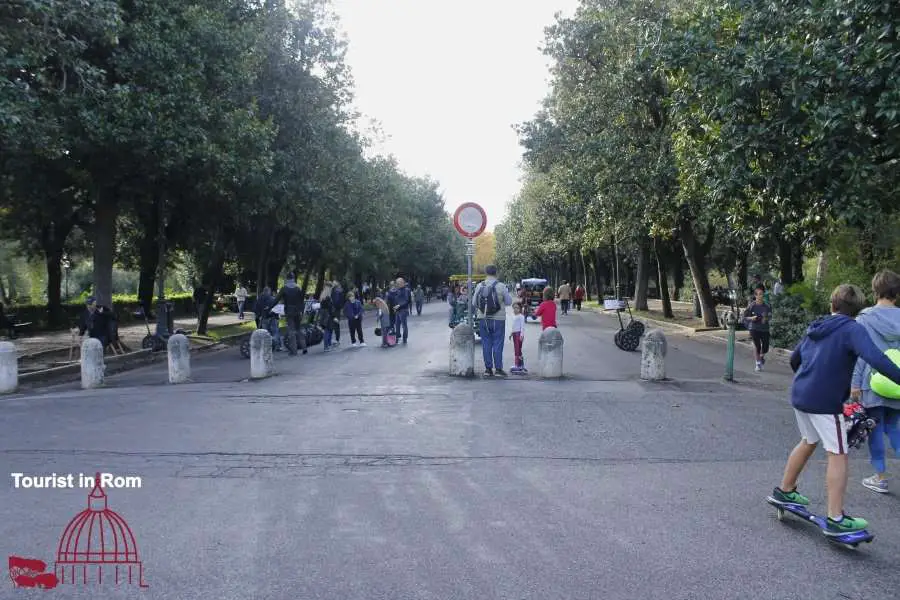
Villa Borghese has numerous entrances and is well served by public transport: Metro line A to Spagna, Metro A and Tram 2 to Piazzale Flaminio, bus lines 61, 89, 160, 490 and 495 through the villa, Tram 3 and 19 to the Galleria Nazionale d’Arte Moderna or the zoo (Bioparco), and from Via Veneto opposite Porta Pinciana.
Villa Borghese is one of the green lungs of the city centre and offers a wide variety of running routes. Coming from Piazzale Flaminio there is a small lake on the left. Next to the villa’s car park – also accessible through the pedestrian tunnel at Spagna metro station – there is a large fitness centre with swimming pool and sauna with direct access to the villa.
Villa Ada
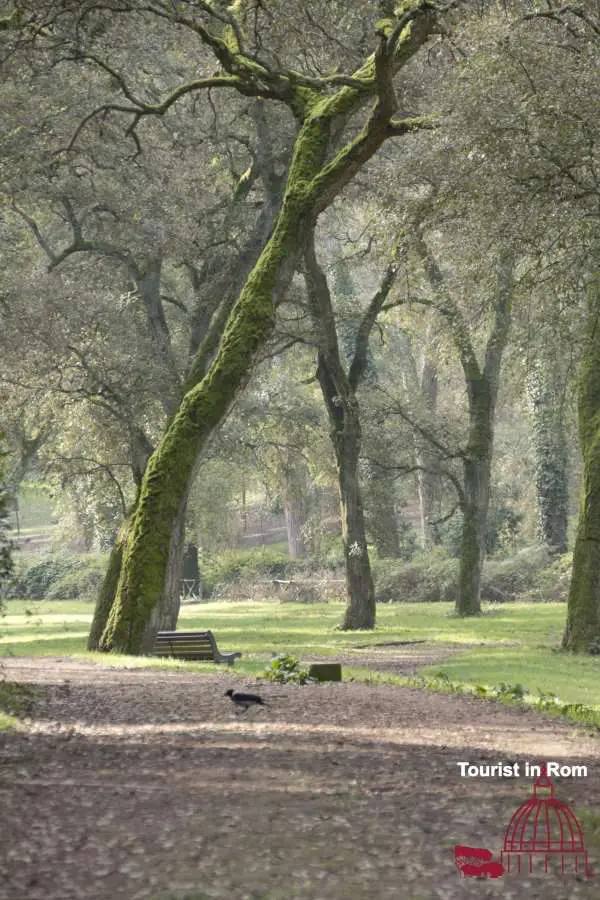
Villa Ada lies on Via Salaria and is Rome’s second largest villa park. It has a very high density of trees and offers ideal running conditions. It is not the easiest to reach by public transport: buses run along the more distant Via Nemorense; from the Nemorense/Crati stop served by lines 63, 83, 92, 168 and 310 it is around 500 metres to the villa.
In the northern part of the villa there is a lake. Many Romans do outdoor exercise there and there is also a bicycle hire service.
Information on further parks and villas in Rome can be found on the page The Most Beautiful Parks and Villas in Rome.
FAQ – Frequently Asked Questions about Jogging in Rome
Where can I go jogging in Rome?
Rome offers a wide choice of running routes: the Tiber path with over 15 kilometres of continuous track, the archaeological park of the Colosseum and the Circus Maximus, the Via Appia Antica, the Parco della Caffarella, the Parco degli Acquedotti, and the great villa parks Villa Pamphili, Villa Borghese and Villa Ada. In the centre, an early morning run past the major sights is hard to beat.
When is the best time to go jogging in Rome?
The early morning hours are ideal – the city is quiet, temperatures are pleasant and even the most famous sights are barely visited. Anyone running in summer should aim to be out before eight o’clock.
Can I jog along the Tiber in Rome?
Yes, the Tiber is one of Rome’s best running routes. A continuous path runs from Via Flaminia in the north to the Marconi Bridge in the south – a distance of just over 15 kilometres. The path is paved, wide enough for joggers and cyclists, and largely traffic-free. The right bank (orographic right) is recommended.
Can I jog near the Colosseum?
Yes. From Piazza Venezia the traffic-calmed Via dei Fori Imperiali leads to the Colosseum, from there continuing along Via di San Gregorio to the Circus Maximus. The loop can be closed via Via di San Teodoro up to the Capitoline Hill, or along Via del Teatro di Marcello back to Piazza Venezia.
Is the Via Appia Antica suitable for jogging?
Only partially – the surface alternates between modern cobblestones and ancient paving, which makes running demanding. For a comfortable run in the area, the nearby Parco della Caffarella is a better option. Access is from the Domine Quo Vadis bus stop served by lines 118 and 218, and from Via Latina.
Which parks are best for jogging in Rome?
Villa Pamphili in the west, Villa Borghese to the north of the centre, and Villa Ada on Via Salaria are the most popular running parks. For runs with a historical backdrop, the Parco della Caffarella and the Parco degli Acquedotti in the south of the city are excellent choices.
Is jogging in Rome possible in summer?
Yes, but with limitations. The heat at midday can be considerable. Early morning runs before eight o’clock are recommended, as are shaded routes such as the Tiber path, the great villa parks, or the green spaces along the Terme di Caracalla. The Circus Maximus offers virtually no shade.
Are there running events in Rome?
Yes, Rome regularly hosts running events. Current dates can be found in the monthly events overview.