
Last updated:
The 4th of October has been a public holiday in Italy again since 2026 – and for visitors to Rome it is a day with a special character: schools and public offices are closed, museums and attractions are open, and in the evening a solemn procession winds through the lanes of Trastevere, one of Rome’s oldest neighbourhoods. Those in the city on this day experience Rome from a quieter, more contemplative angle – shaped by history, devotion and the enduring presence of one of Christianity’s most beloved saints.

Francis – Patron Saint of Italy and a New Old Holiday
The story of why the 4th of October is a public holiday is a long and somewhat winding one. In 1939, Pope Pius XII proclaimed Saint Francis of Assisi and Saint Catherine of Siena the joint patron saints of Italy. From that point, the 4th of October was observed as the feast day of both patrons – and until 1977 it was indeed a day off work. In the course of reforms under the Andreotti government, the holiday was abolished on economic grounds.
Nearly fifty years later, the Italian parliament restored it. With broad cross-party support – 247 votes in favour, just two against – legislation was passed in autumn 2025 making the 4th of October a public holiday again from 2026. The occasion was the 800th anniversary of the death of Saint Francis, who died on the evening of the 3rd of October 1226 in Assisi. Italy now observes twelve public holidays in total.
The 4th of October is therefore not only a religious commemoration but also a reflection of how vivid the figure of Francesco d’Assisi remains in Italian society – as a peacemaker, as an early advocate of care for creation, as a poet, and as the author of the Cantico delle Creature, one of the earliest literary works in the Italian language.
Francis and Rome – a Franciscan City
Francis was not a Roman. But he came to Rome on several occasions – and the city has not forgotten him. Those who walk through Rome encounter him in surprisingly many places.
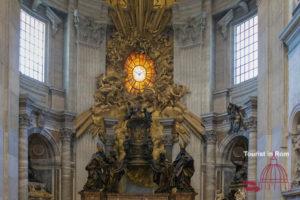
In St. Peter’s Basilica, on the left side of the Cathedra Petri, stands a statue of the order’s founder.
In front of the Basilica of San Giovanni in Laterano, at the beginning of Via Carlo Felice, a statue by the sculptor Giuseppe Tonnini commemorates the 700th anniversary of the saint – a monument that has been part of the Lateran neighbourhood’s cityscape for decades.
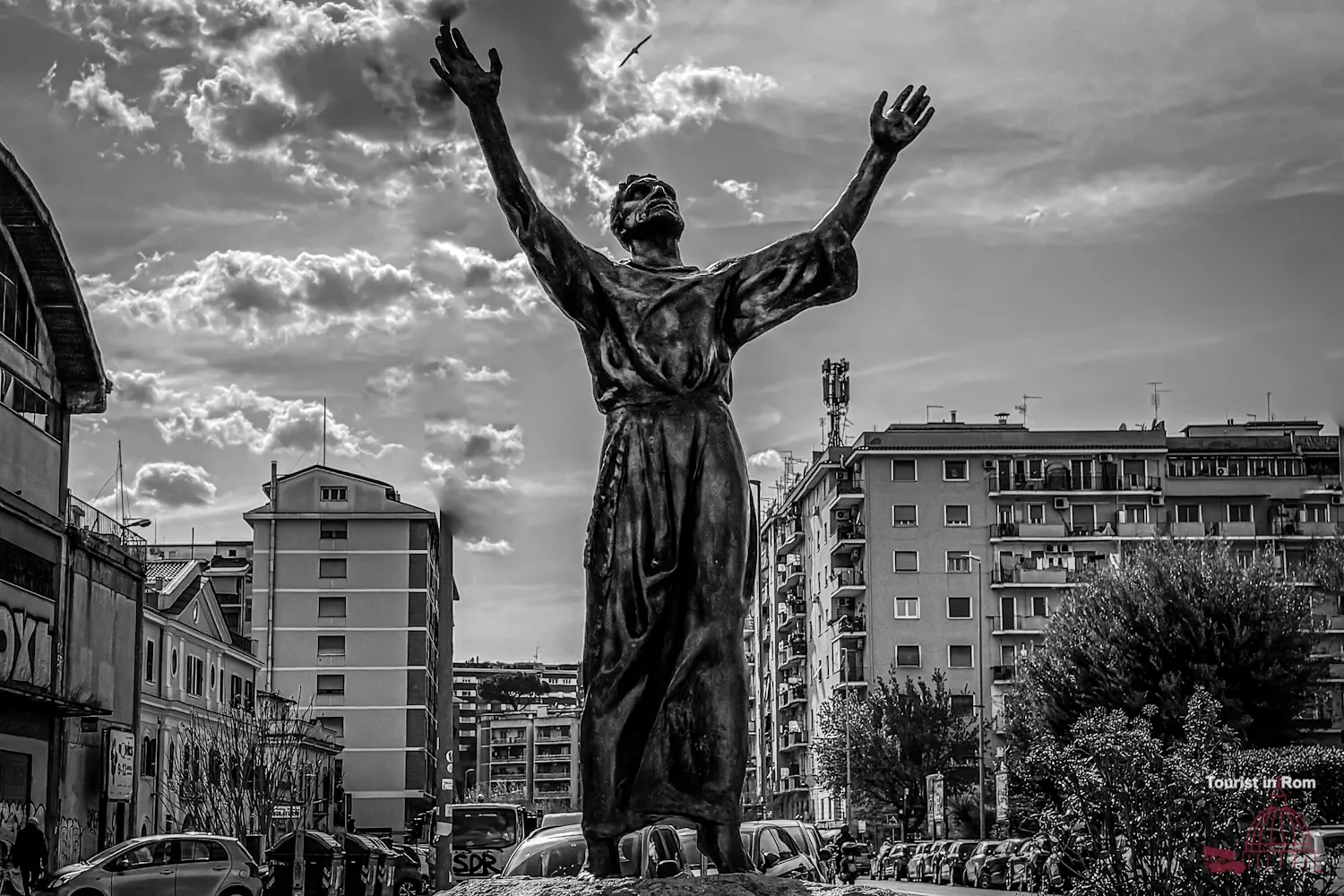
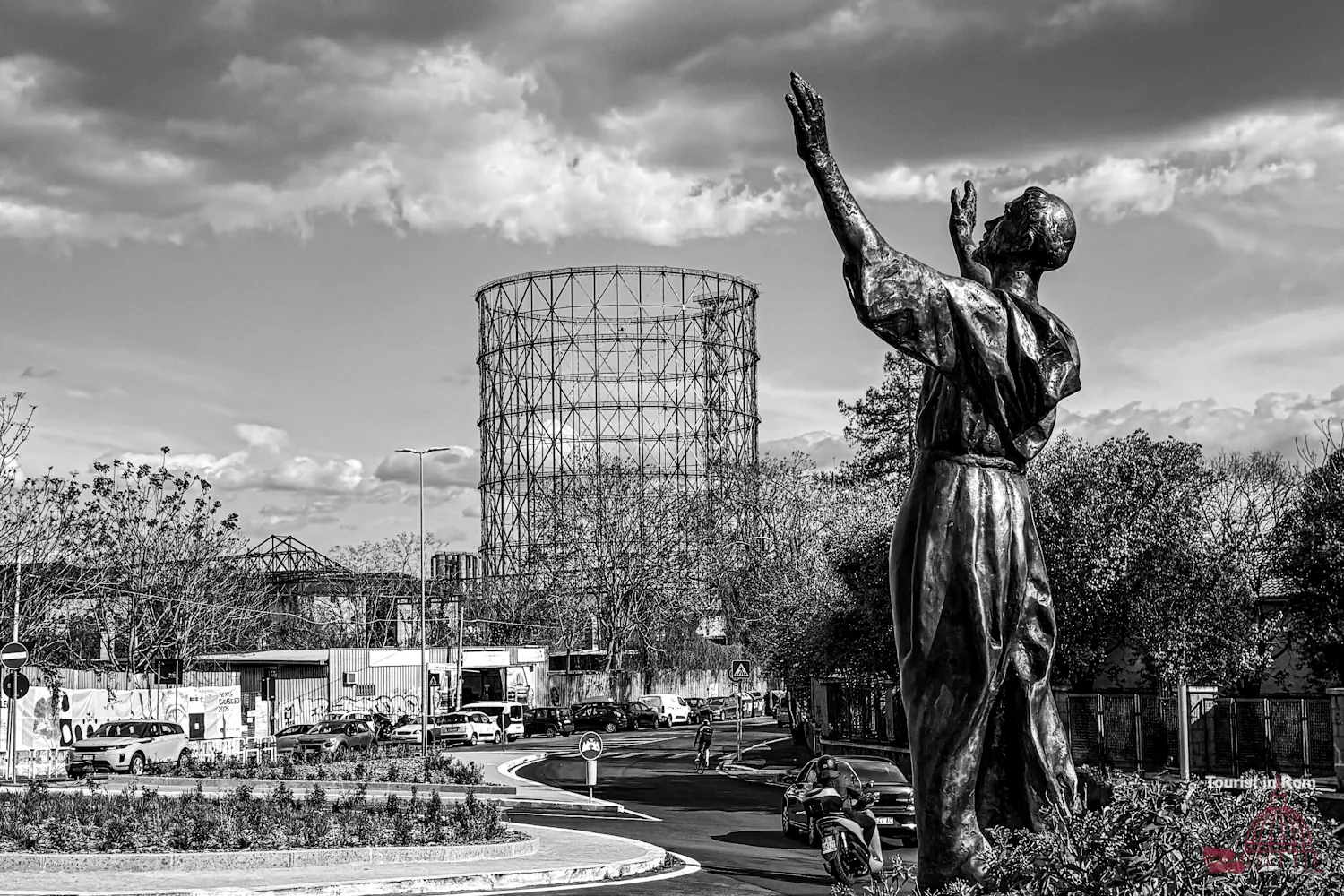
And since December 2025 there is a third statue: at the restored Ponte dell’Industria over the Tiber, which was fully renovated as part of the 2025 Jubilee works and officially named after Saint Francis of Assisi, a bronze statue of Francis now stands, based on a model by sculptor Marcello Tommasi and donated by the Comitato Nazionale for the 800th anniversary celebrations.
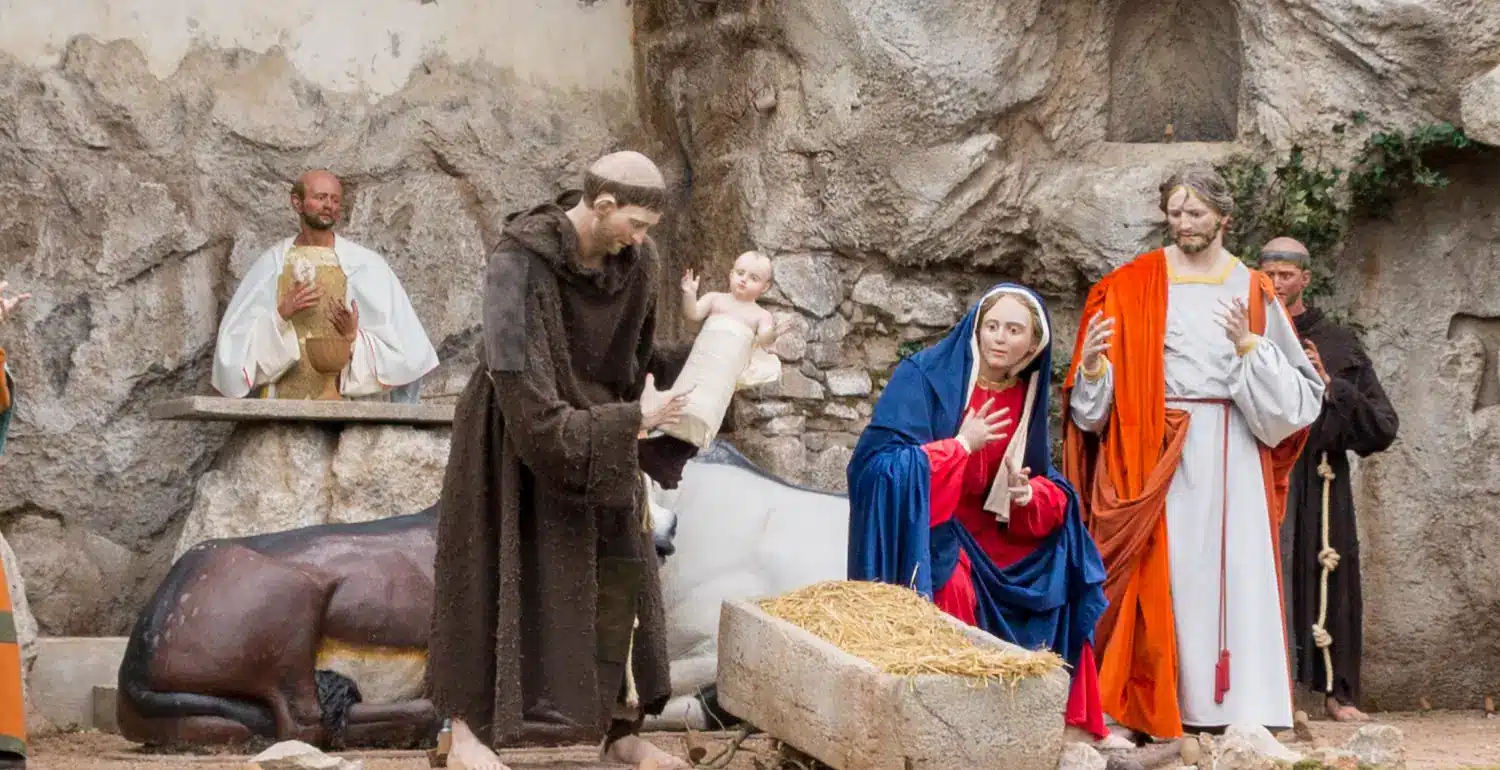
The deepest Franciscan trace in Rome, however, lies in Trastevere. In the church of San Francesco a Ripa, in the heart of one of the city’s most vibrant neighbourhoods, is the cell where Francis stayed during his visits to Rome to meet Pope Innocent III. The stone on which he slept is preserved to this day as a relic and can be visited. The church of Santa Maria in Aracoeli on the Capitoline Hill and the Santi Apostoli are further significant Franciscan churches in the city.
Celebrations on 4 October – Procession in Trastevere
The focal point of the festivities in Rome is the parish church of San Francesco a Ripa in Trastevere. Every year on the 4th of October, the community marks the feast of its patron saint with a full programme: a morning Mass for children from the surrounding schools, a solemn High Mass in the afternoon attended by senior representatives of the Diocese of Rome, and at 7 pm a procession through the lanes of Trastevere. The statue of Saint Francis is carried on the shoulders of volunteers, accompanied by a brass band, along Via Morosini, across Piazza San Cosimato and on through the neighbourhood. The evening continues with a concert by the Fanfare of the Bersaglieri and ends with a fireworks display. For those in Rome on this day who want a glimpse of authentic Roman neighbourhood life, Trastevere is the place to be.
The Vatican on 4 October
The Vatican, too, is present on the feast of Saint Francis – not least through a connection of names: Pope Francis, elected in March 2013, chose his papal name in deliberate reference to the saint of Assisi. It was the first time in history that a pope had taken this name.
On 4 October the Pope holds the Angelus prayer at St. Peter’s Square, drawing the faithful and visitors from around the world. No reservation is required. The Vatican Museums follow their normal opening schedule on this day.
Day Trip to Assisi – the Saint’s Home
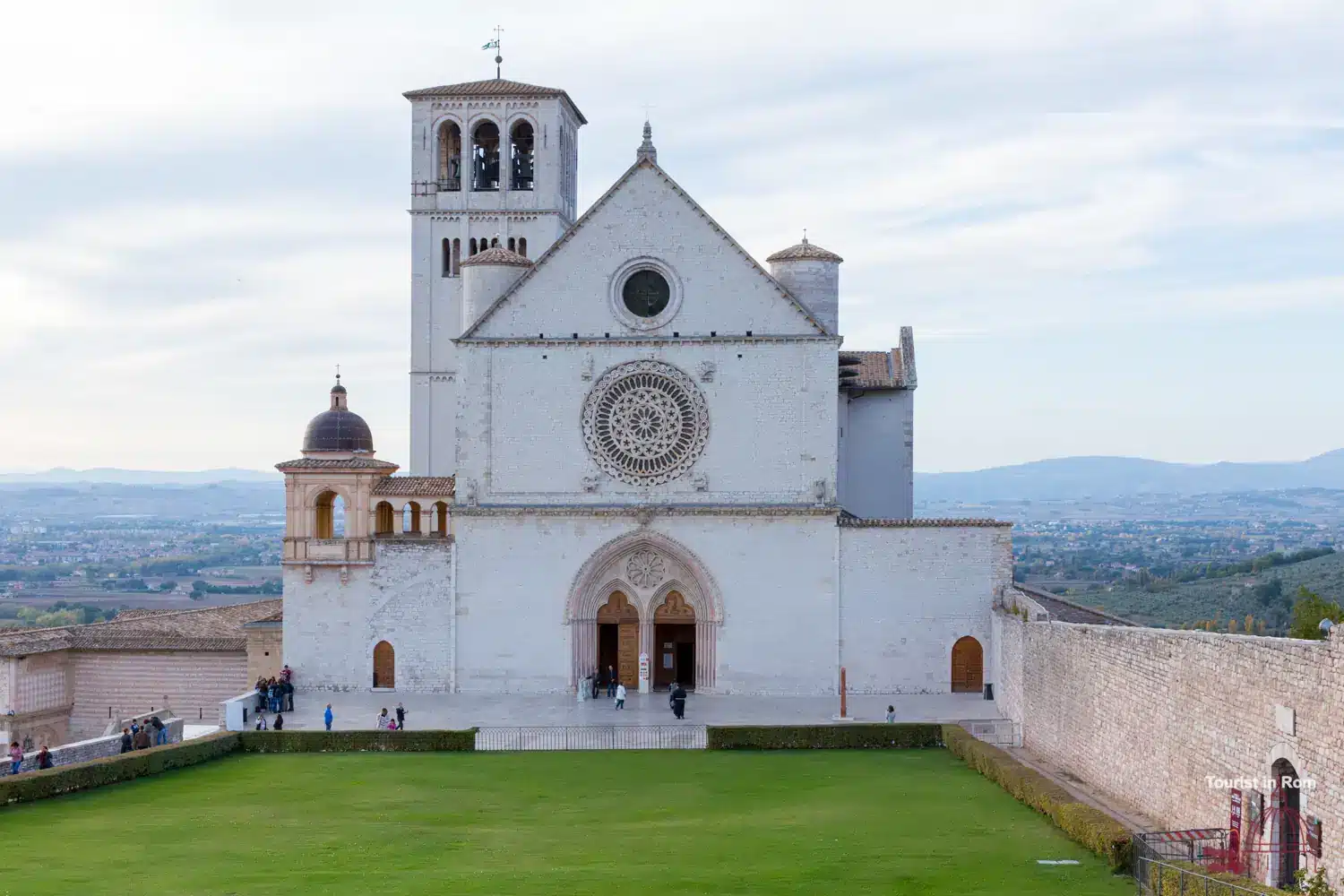
Those who want to experience the 4th of October more fully may consider a day trip to Assisi – the town in Umbria where Francis was born, lived and died, and where his remains rest in the lower basilica of the Basilica of San Francesco. On this day Assisi draws pilgrims and visitors from around the world, with solemn Masses, processions and a festive programme throughout the town.
Travelling by train is possible but cumbersome, as the station is not in Assisi itself. Organised day tours from Rome are considerably more comfortable, and they often combine Assisi with another regional highlight – for instance the medieval hilltop town of Orvieto, perched on a plateau of volcanic tufa rock.
Book an Assisi & Orvieto day trip from Rome on Tiqets
Day tours to Assisi from Rome on GetYourGuide
Anno Giubilare Francescano 2026
The year 2026 is dedicated to the 800th anniversary of the death of Francis of Assisi. The Church has officially proclaimed it the Anno Giubilare Francescano – a Franciscan Jubilee Year – drawing pilgrims, the faithful and those with a cultural interest from around the world to Assisi. In the spring of 2026, the Basilica of San Francesco hosted a remarkable exhibition: for the first time in history, the remains of the saint were displayed to the public, drawing hundreds of thousands of visitors to Umbria. Those who travel to Assisi will find a city that has welcomed pilgrims and travellers for centuries – and whose special atmosphere remains very much alive.
Frequently Asked Questions about the Feast of St. Francis in Rome
What is happening in Rome on 4 October?
The 4th of October is a public holiday in Italy since 2026, in honour of Saint Francis of Assisi. Schools and public offices are closed, while museums and attractions remain open. In the evening a solemn procession takes place in Trastevere, and in St Peter’s Square the Pope holds the Angelus prayer.
Why is 4 October celebrated in Italy?
The 4th of October is the feast day of Saint Francis of Assisi, who is the joint patron saint of Italy alongside Saint Catherine of Siena. Pope Pius XII proclaimed both as patrons of the country in 1939. The holiday was abolished in 1977 and reintroduced in 2026 to mark the 800th anniversary of the death of Saint Francis.
What is there to experience in Rome on 4 October?
In the evening, a solemn procession takes place in Trastevere: the statue of Saint Francis is carried through the neighbourhood’s lanes, accompanied by a brass band, and the evening ends with a fireworks display. In St Peter’s Square, the Pope holds the Angelus prayer. Museums and attractions are open throughout the day.
Are the Vatican Museums open on 4 October?
Yes, the Vatican Museums follow their normal opening schedule on the 4th of October.
Is a day trip to Assisi worthwhile on 4 October?
Assisi has a particularly special atmosphere on this day, with pilgrims and visitors arriving from around the world and solemn Masses and processions taking place throughout the town. As the train station is not in Assisi itself, we recommend an organised day tour from Rome, which often includes Orvieto as well.
What is the connection between Pope Francis and Saint Francis?
Pope Francis, elected in March 2013, deliberately chose his papal name in reference to the saint of Assisi – the first pope in history to take this name. The choice was a programmatic statement in favour of simplicity, peace and care for creation.